
A Beginner’s Guide to Eating Organic on a Budget
Simple swaps, smart shopping, and realistic habits anyone can afford. Eating organic doesn’t have to be expensive or overwhelming. You don’t need to switch your entire kitchen overnight — small, strategic changes can help you enjoy cleaner, healthier foods without stretching your budget. This beginner‑friendly guide breaks down exactly how to start eating organic in a way that’s simple, affordable, and sustainable for real life.
WELLNESS & ORGANIC LIVING
5/17/20262 min read
Understanding Organic Eating
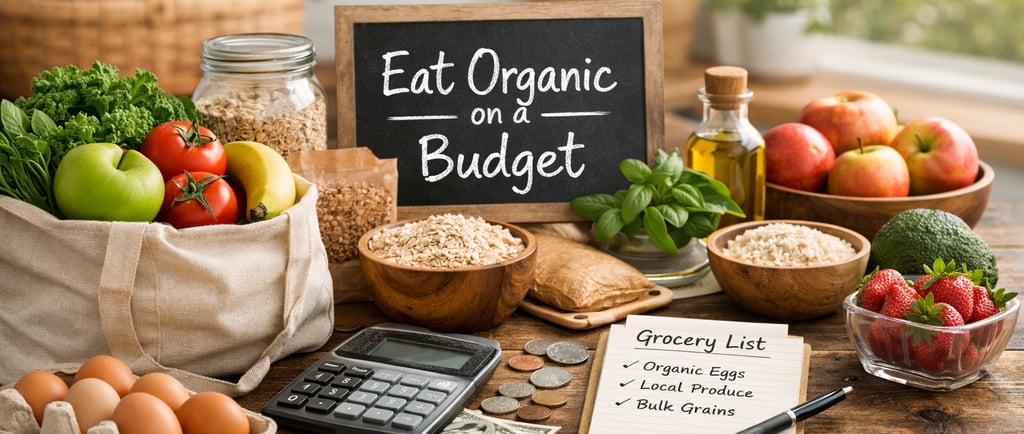
Eating organic doesn’t have to be expensive or overwhelming. You don’t need to switch your entire kitchen overnight—small, strategic changes can help you enjoy cleaner, healthier foods without stretching your budget. This beginner-friendly guide breaks down how to start eating organic in a way that’s simple, affordable, and sustainable for real life.
Why Choose Organic?
Organic foods are grown without synthetic pesticides, artificial fertilizers, or genetically modified ingredients. For many, choosing organic means reducing chemical exposure, supporting better farming practices, and eating foods that feel cleaner and closer to nature. However, you don’t need to buy everything organic; it’s crucial to know where it matters most—and where it doesn’t.
Smart Swaps for Organic Foods
1. Start with High-Impact Organic Foods: Some foods absorb more pesticides than others. When on a budget, consider buying organic versions of berries, leafy greens, apples, grapes, peppers, and tomatoes. These foods have thin skins and higher pesticide exposure, so they offer the biggest benefit for your investment.
2. Skip Organic When It Doesn’t Matter: There are various items that naturally have low pesticide levels, making it unnecessary to buy organic. Conventional bananas, avocados, onions, pineapples, sweet corn, and cabbage can typically be purchased without paying the organic premium.
3. Shop Smart for Affordable Options: You don’t need fancy stores to eat organic. Look for options at local farmers’ markets, discount grocery stores, bulk food sections, and store-brand organic lines. Seasonal produce sales can also significantly reduce costs—organic strawberries in summer, for example, are far cheaper than in winter.
Cost-Effective Organic Pantry Choices
4. Choose Organic Pantry Staples First: Pantry items are often cheaper than fresh produce and can last longer. Consider stocking up on organic oats, rice, beans, lentils, pasta, and tomato sauce. These staples stretch your meals and help build healthier habits without overspending.
5. Cook More, Buy Less Pre-Made: While convenient, organic snacks and ready-made meals can be pricey. Cooking simple meals at home not only saves you money but also allows you to control ingredients and reduce additives. Start with easy recipes such as soups, stir-fries, and grain bowls.
Maximizing Your Budget with Frozen Options
6. Buy Frozen Organic Produce: Frozen fruits and vegetables are often cheaper than fresh organic produce. They get picked at peak freshness, and great options include organic berries, spinach, broccoli, and mixed vegetables. Plus, they last longer and help reduce food waste.
7. Plan Meals Around Sales: Check weekly flyers or store apps before shopping to build your meals around discounted organic items. This simple habit will aid in managing your expenses without compromising your organic choices.
In conclusion, adopting an organic lifestyle on a budget is feasible with these strategic swaps and smart shopping habits. Making informed choices will allow you to enjoy the benefits of organic eating without breaking the bank.
© 2026 Smarteryouu.com. All rights reserved. Some images are royalty‑free or AI‑generated. All written content, reviews, and recommendations are original and protected under copyright law.